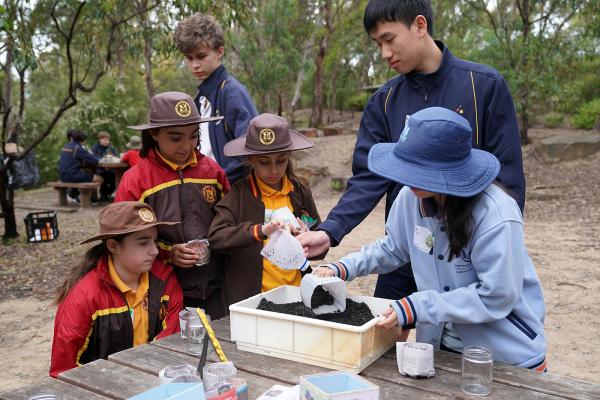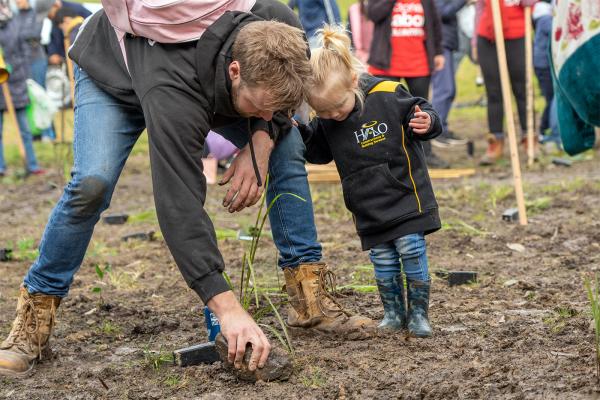
Protecting our environment and biodiversity is everyone's responsibility. We encourage residents to get involved in climate action and sustainability – whether in natural spaces, at home, or in the garden.

We encourage and support residents, schools and local environmental groups to get involved in climate action, sustainability, and protecting our natural environment. Find out how you can participate....
Protecting our environment and biodiversity is everyone's responsibility. We encourage residents to get involved in climate action and sustainability – whether in natural spaces, at home, or in the garden.

Our Climate Emergency Response Plan (CERP) outlines our approach to addressing climate change and its impact on Manningham.
We encourage and support residents to get involved in climate action, sustainability, and protecting our natural environment.
Residents can sign up for the following programs and events.
Spring Outdoors Program
Come along to one of the many Spring Outdoors events. In collaboration with Nillumbik and Banyule Councils, we offer over 50 programs each year, including sessions on local frog and bird species.
Check our What's on event calendar each spring to find out what's happening near you.
Home Harvest
The Home Harvest seminar series is a free monthly program that teaches you how to grow fresh, healthy food at home. Home gardening is a fun way to take climate action and benefits both you and the environment. Whether you're new to gardening or an expert, everyone is welcome.
Find out more about the program and view upcoming sessions.
Doncaster Hill Community Food Garden
Join the Doncaster Hill Community Food Garden. Help local volunteers grow fresh produce, most of which is donated to local charities and community food banks.
Landcare
Join your local Landcare group.
Guided walks
Join a guided walk through Manningham bushland and learn more about our unique biodiversity. Check our What's on event calendar to find upcoming walks.
Inspired Living Series
Come along to the Inspired Living Series. A range of sustainable activities and events for all ages, including keynote speaker events featuring a diverse line-up of local and international subject matter experts.
National Tree Day
Plant some trees with us on National Tree Day. Check our What's on event calendar each July to find planting locations.
Clean Up Australia Day
Join us every March to help clean up the parks and waterways in Manningham. This one-day event is a fantastic way to get involved in a nationwide effort to protect and preserve our local environments and wildlife from the damages of litter.
Solar Savers
Get free advice about energy saving and solar installation services via the Solar Savers Program. You can register for a free solar and/or battery quote and get access to state and local government rebates and subsidies. We also run regular Solar Savers information sessions.
Check the What's on event calendar for more details.
iNaturalist - City Nature Challenge
Observe and document Manningham's natural environment as part of the iNaturalist - City Nature Challenge. During a four day observation period, residents are invited to find, photograph and document the native wildlife that lives and grows in our neighbourhoods.
iNaturalist observations submitted are added to the global iNaturalist database and shared with the Atlas of Living Australia (ALA) and the Global Biodiversity Information Facility to help scientists find and use your data. All you have to do is observe.
Aussie Backyard Bird Count
Sign up for the Aussie Backyard Bird Count, run each October by Birdlife Australia. You can join in on the fun and contribute with any birds you spot in Manningham by visiting Birdlife Australia.
Melbourne Water Frog Census
Get involved in local citizen science by recording frog species in Manningham with the Melbourne Water Frog Census App. An easy to use app to record audio and identify frog species by their call in local waterways, parks, and on your own property.
More information is available at Melbourne Water.
Waterwatch program
Join Waterwatch and get involved in exploring and protecting our local waterways. Volunteers collect water quality data that contributes to scientific research, management planning and on ground actions that improve the health of our waterways.
To sign up for Waterwatch, email environment@manningham.vic.gov.au.
For more information, contact the Environment team at environment@manningham.vic.gov.au or on 9840 9333.
The Doncaster East Honour Board hangs within the Doncaster RSL. Find out more about the soldiers. ...
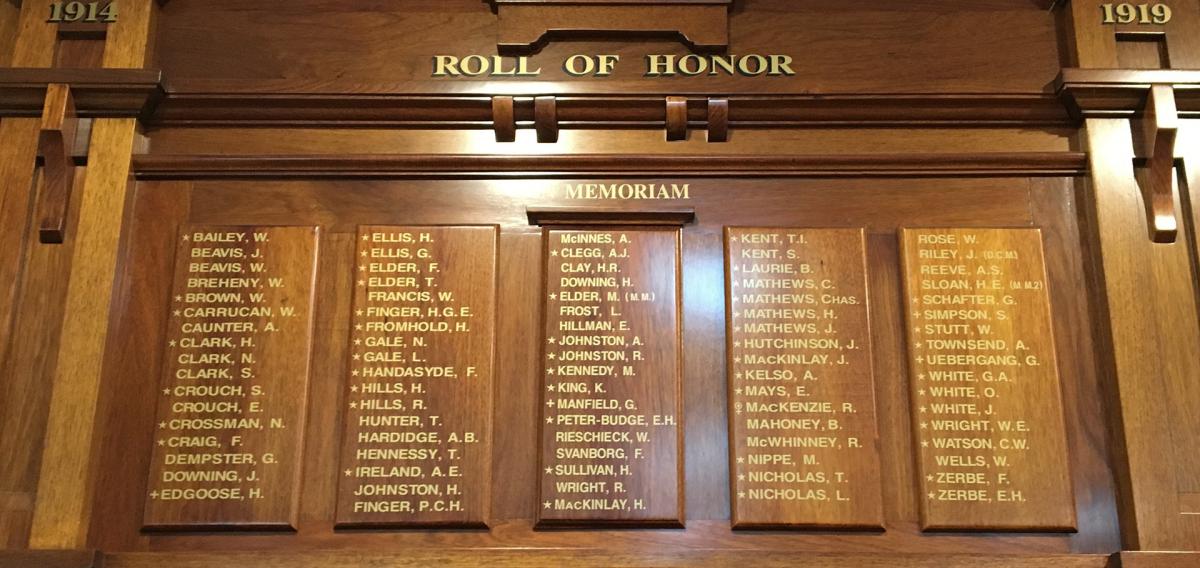
The Doncaster East Honour Board hangs within the Doncaster RSL.
Find out more about the soldiers.
Ethelbert Crouch was born in 1886 in Doncaster to Henry William and Hert Amelia Crouch. He went to Doncaster State School and attended the Holy Trinity Sunday School and Youth Group.
Ethelbert enlisted in the Australian Imperial Force (AIF) on 22 July 1915 and just over six months later, left for Cairo in Egypt on board His Majesty’s Australian Transport (HMAT) Demosthenes. In March the next year he came down with bronchitis and was hospitalised for two weeks before joining his unit as part of the 6th Battalion in France on 15 May 1916.
Ethelbert suffered wounds to his head, chest and hands on 5 October 1917 and spent the rest of the year recovering in various English hospitals, with “loss of sight resulting from wounds” and a traumatic cataract in his right eye. Recommended for the Distinguished Conduct Medal, he left for home on the hospital ship, Osterley, and was discharged on 25 June 1918.
Ethelbert married Victoria Lillian Petty and they raised a family on their orchard in Woodhouse Street, Doncaster East. He died in 1987 at the age of 101.
John William Downing was born in 1894 in Elsternwick to William Henry Hambling and Mary Ann Downing. He had two other siblings. In 1917 the family were living in Hunt Street, Doncaster East. After leaving school John trained as an engine fitter.
John enlisted on 5 February 1917 and left from Sydney on board His Majesty’s Australian Transport (HMAT) Marathon on 10 May 1917. He was attached to the Australian Flying Corps based at Farnborough Training Depot in England. He qualified as a First Class Air Mechanic on 1 November 1917 and was based in England at the AFC Training Depot in Wendover. He was discharged on 16 June 1919 after returning to Australia on HMAT Kaiser-I-hind.
John also served during World War II and was known to be living in Queensland in 1959.
Stanley Crouch was born in 1892 in Doncaster. His parents were Henry and Marion Crouch. He was educated at Doncaster State School and attended Sunday School and Youth Group at Holy Trinity Doncaster. After leaving school he worked on the family orchard.
Stanley enlisted on 7 July 1915 and left Melbourne on 10 November 1915 on board His Majesty’s Australian Transport (HMAT) Ascanius for France. As part of the 29th Battalion, C Company, he was wounded on 28 August 1916 but remained on duty. He was again wounded in action by gunshot to the chest and transferred to England for treatment at the Horton War Hospital, Epsom. He returned home on 4 May 1917 on the hospital ship, Miltiades, and was discharged from the army on 13 August 1917.
Stanley returned to Doncaster to work as an orchardist. He married Agnes Elizabeth Bienvenu of Leeds Street, Doncaster and died in 1975, aged 82.
Norman Crossman was born on 22 November 1894 to Charles and Sarah Crossman. He was educated at Doncaster State School and joined in all the activities of the youth group at Holy Trinity Sunday School.
Norman enlisted on 17 July 1915, initially serving with the Senior Cadets and training with the Citizen Forces at Box Hill. He married Phyllis Diamond just before leaving for England on His Majesty’s Australian Transport (HMAT) Persic on 22 December 1916. He served as a driver in the headquarters of the Australian Imperial Force (AIF) Depot in England where he was also trained as a gunner.
Norman was sent to France as a driver on 3 November 1917 and was injured in his left leg on 15 October 1918. After initial treatment in Rouen Hospital, on 17 October he was transferred to the Bath War Hospital in England then returned to Melbourne on the hospital ship, Orantes, arriving on 30 January 1919. After his discharge from the army, Norman and Phyllis lived in South Geelong.
Richard Harold Clay was born on the 10 February 1894, to Richard and Mary Clay who were orchardists in the region. He was always called Harold to avoid confusion with his father Richard. Harold was a popular and active member of the Holy Trinity youth group, and a bass singer in the church choir.
Harold enlisted for military service on 6 July 1915, leaving Melbourne on the Empress of Britain and arriving in Alexandria, Egypt, on 7 January 1916. As a member of the 14th Field Artillery Brigade in the 8th Battalion, he was involved in action at Alexandria, Serapeum and Tel-el-Kebir and quickly promoted to the rank of Sergeant.
Harold was severely wounded on 31 July 1917 at Ypres in Belgium and died on 4 August 1917, unaware that his mother had died in Doncaster only two weeks earlier. He was 23 years old.
Army records use the name Harold Richard Clay and it was not until forms were sent to the next of kin for the Roll of Honour at the Australian War Memorial that the error was discovered and corrected.
Harold is buried at the Brandhoek New Military Cemetery, Belgium, and his name is on the Australian War Memorial, Canberra, and the Doncaster War Memorial.
Henry August Fromhold was born on 5 September 1891 to Heinrich Augustus Fromhold and Annie Marie Zerbe in Doncaster.
Henry’s parents were both from well-known orcharding families in the district, so he followed in the family footsteps as an orchardist before enlisting at the age of 23. He served in the 4th Light Horse Regiment before being hospitalised with synovitis (joint inflammation) in November 1917.
In February 1918, Henry rejoined his regiment in India before returning to Australia a year later. Henry was awarded the 1914-15 Star, British War Medal and the Victory Medal for his service during World War I.
Henry settled back into the local orcharding life in Doncaster and married Adela Elizabeth White in 1920, with whom he had two children. He died in October 1960, aged 69.
Born in 1894 to William Elder and Elizabeth Rose Williams, Frank was the middle brother of three brothers from the district who served in World War I. Corporal Murray Elder was killed in action at Bullecourt, France in 1918 and Driver Thomas William survived the war and returned to Australia in March 1919.
An accountant by profession, Frank enlisted in the Australian Flying Corps at age 21 on 9 July 1915 where he served in Egypt as part of No 1 Squadron’s Australian Army Pay Corps. During his service, he was hospitalised for ‘melancholia’ (an old term for depression) before returning home on 12 November 1917. For his service he received the British War Medal and the Victory Medal.
Thomas William Elder was the eldest of three Elder brothers who served from the district in WWI. He was born in 1882 to William Elder and Elizabeth Rose Williams. His brothers were Private Frank Elder (who survived the war and returned to Australia in November 1917) and Corporal Murray Elder (killed in action at Bullecourt, France in 1918).
Thomas married Laura Marion Maskiell in 1906 and worked as a fruit grower in the district. He enlisted in Doncaster on 8 March 1915 and served as a driver with the 23rd Infantry Battalion in France. He was wounded in action on 28 July 1916 with a slight gunshot injury to his left leg and re-joined his unit almost a year later before returning home on 9 March 1919. Thomas received the 1914-15 Star, British War Medal and Victory Medal for his service in WWI. He died on 29 December 1955 aged 72.
Murray Elder was the youngest of three Elder brothers who served from the district in World War I. He was born in 1896 to William Elder and Elizabeth Rose Williams. His brothers were Private Frank Elder (who survived the war and returned to Australia in November 1917) and Driver Thomas William (who returned to Australia in March 1919).
Murray was born in Doncaster West in 1896 and attended Doncaster East State School before taking up work as a clerk. He enlisted on 15 March 1915, two months before his 19th birthday. Murray served at Gallipoli and in France. He was wounded in action on 3 May 1917 with a gunshot injury to his left leg.
Murray re-joined his unit in November 1917 and was killed in action in Bullecourt, France, less than a year later on 10 June 1918, aged 22. Murray is buried in Ribemont Communal Cemetery Extension (Somme) in France and his name is at panel 99 in the Commemorative Area at the Australian War Memorial in Canberra.
Herbert Harry Edgoose was born in 1885 in Port Fairy to John James Edgoose and Sarah Ann Adams who had seven other children.
One of Herbert’s brothers was Lieutenant Percy Llewellyn Edgoose who served in the 7th Infantry Battalion until March 1919. Herbert was a clerk by profession and enlisted in the Australian Army’s Medical Corps at the age of 31. He served with the 14th Australian General Hospital and Reinforcements from July 1916 to November 1917 on the Western Front in France before being wounded in action.
Herbert returned to Australia on 22 September 1919 where he was awarded the British War Medal and the Victory Medal for his service. He married Ethylene Elizabeth Le Lievre in 1920 and died at age 60 in Richmond.
Harold Downing was born in 1898 in Albert Park to William Henry Hambling Downing and Mary Ann Cock of Doncaster East. He was the brother of Private John William Downing of the Australian Flying Corps who returned to Australia in May 1919.
A grocer’s assistant, Harold enlisted on 8 July 1916 aged 18 and served in the Australian Army’s 38th Infantry Battalion from June to December that year. He was killed in action on the Western Front in Belgium on 4 October 1917 at the age of 19. He is remembered on Panel 25 of the Ypres (Menin Gate) Memorial in Belgium, alongside the names of more than 54,000 soldiers whose graves are also unknown.
Born in 1880, Albert Clegg was the son of Edward Clegg and Susanna Whitworth, one of seven children.
Albert attended Doncaster State School and worked as an orchardist before enlisting on Christmas Day 1915. He joined the 24th Infantry Battalion (9th to 12th Reinforcements) from February to April 1916 and was promoted to Sergeant on 7 January 1917.
Albert was killed in action at the age of 37 on the Western Front in Grevillers, France, on 13 March 1917. Albert is buried in Adanac Military Cemetery (plot II, row 1, grave no 2) in Miraumont, France. His name is also located at panel 101 in the Commemorative Area at the Australian War Memorial, Canberra.
Stuart Clark was born in 1884 in Dunkeld to Robert and Louisa Clark of Doncaster East. He was the elder brother of Driver Hector Clark who returned to Australia in October 1918.
A farm labourer until he enlisted at the age of 28, Stuart joined the 7th Infantry Battalion. He served in Egypt as a trooper in the 14th Light Horse Regiment and Camel Corps before being wounded in action on 8 August 1915 with a slight gunshot wound to the hand. He was hospitalised for this injury and others (jaundice and rheumatism) during his service, then returned home on 5 March 1919.
Stuart received the 1914-15 Star, British War Medal and the Victory Medal for his contribution during World War I. He died aged 41 in February 1926.
Hector Clark was born on 20 May 1894 in Roseberry to Robert and Louisa Clark of Doncaster East. He was the younger brother of Trooper Stuart Clark who returned to Australia in March 1919.
Like his older brother, Hector was a labourer and enlisted early in the war on 20 August 1914, aged 20 years. He served as a driver as part of the Divisional Train (1st to 4th Companies, Army Service Corps) on the Western Front in France until returning home on 15 December 1918 on His Majesty’s Australian Transport (HMAT) Borda.
For his service during World War I, he received the 1914-15 Star, the British War Medal and the Victory Medal. Hector marred Estella Mary Logan in 1920 and died in Hastings on 26 March 1961.
Alfred Caunter was born in 1886 in Cornwall, England, to Edwin Caunter of Launceston, England. He worked as a farmer before enlisting on 6 November 1916 in the 37th Infantry Battalion of the Australian Army from February to December 1917.
His unit left Melbourne on His Majesty’s Australian Transport (HMAT) A70 Ballarat. The troopship was bound for England but was torpedoed by a submarine in the English Channel on 25 April 1917 and sank the next morning despite efforts to tow the ship to shallow water All 1,752 people board were evacuated.
Alfred served in France until he returned home on 5 September 1919. He received the British War Medal and the Victory Medal for his service during World War I. He died on 17 April 1959 aged 85.
William Michael Breheny was born in 1893 in Rushworth to Patrick Breheny and Margaret McGuiness.
William worked as a labourer before enlisting in the Signals Corps as part of the 13th Light Horse Regiment at age 22 in January 1915. He served at Gallipoli and in France before returning home on 5 June 1919.
William married Elise Lousia Read in September 1944 and had two children but died less than five years later on 1 March 1949. He received the 1914-15 Star, the British War Medal and Victory Medal for his service during World War I.
James Beavis was born in Nunawading in 1873 to William Beavis and Margaret Harbour.
A labourer before enlisting on 27 August 1915, James served in France as part of the 1st Division Salvage Company in the 6th Infantry Battalion from December 1915 to July 1916.
He was reported missing in action for a day on 16 August 1916, with the official paperwork describing him as a “well-known woodchopper in sports with a big build, slightly grey”. James returned home on 12 May 1919. James married Bessie Rose Henty Fereday in 1931 and died in 1957, aged 84.
Ashby Hardridge was born on 6 April 1896 to Arthur Hardridge and Caroline Hillman. Before enlisting in Doncaster on 26 June 1916 at the age of 20 he worked as a salesman.
Ashby served in the 57th Infantry Battalion in France and was wounded in action with a gunshot injury to his left foot on 18 May 1917, before being temporarily promoted to Corporal on 21 December 1917. Ashby was wounded three more times during his service before returning home on 4 January 1919 on the Royal Mail Steamer, Moldavia. Royal Mail Steamers mostly carried mail between Australia and England and only occasionally carried troops, including some from the First Australian Imperial Force (AIF).
Ashby married Florence Adelaide Craze in 1925 and received the British War Medal and Victory Medal for his service in World War I. He died at age 57 on 14 September 1953.
Eric Hillman was born in 1898 to Francis Hillman and Annie Sleeth in Doncaster. A fruit grower before enlisting at age 18 on 6 March 1916, Eric joined the 37th Infantry Battalion and fought in France on the Western Front.
Eric was killed in action at Passchendaele in Belgium on 4 October 1917, aged 19, and was posthumously awarded the British War Medal and Victory Medal. He is buried at Tyne Cot Cemetery (Plot XXII, Row E, Grave 12) in Passchendaele (Belgium) and remembered at panel 128 in the Commemorative Area at the Australian War Memorial, Canberra.
Arthur Ireland was born on 2 September 1896 in Doncaster East, the only child of Elijah Ireland and Keziah Emma Bowers.
He worked as an orchardist in the area before enlisting at the age of 18 on 13 July 1915 and joining the 29th Infantry Battalion in France. Arthur served in the 13th Field Artillery Brigade and was promoted through the ranks during his service, eventually becoming a Lieutenant on 10 July 1918.
He returned to Australia on 18 May 1919 and received the 1914-15 Star, British War Medal and Victory Medal for his service during World War I.
Arthur married Mabel Blanch Peter-Budge in 1920 and served as Commissioner of the Melbourne and Metropolitan Board of Works (MMBW) for 39 years. He was also recognised with an MBE (Member of the Order of the British Empire) for his long-standing service as a councillor. Arthur died on 2 August 1989, aged 92, and is buried in Templestowe Cemetery.
Herbert Johnston was born on 2 October 1870 to Waldron Johnston and Susan Kent. He worked as a carpenter before enlisting in Doncaster East on 12 July 1915 at the age of 44.
By July 1915, the age limit had risen from 38 to 45 and the minimum height requirement had fallen from five feet six inches to five feet two inches. In April 1917 the minimum height was lowered again to five feet.
During the first year of war approximately a third of volunteers were rejected due to height and age restrictions. However, with the relaxation of physical standards, previously ineligible men could enlist. He joined the 5th Infantry Battalion and served in France.
Herbert returned to Australia on 25 August 1917 and was discharged from the army the following year on 18 February. For his service during World War I he received the 1914-15 Star, the British War Medal and the Victory Medal. Herbert died on 7 April 1949, aged 78, in Doncaster.
Samuel Kent was born in Doncaster on 4 January 1872 to James Kent and Jane Nicholas. He worked as a wood carter before enlisting on 29 February 1916, aged 43.
Samuel joined the 59th Infantry Battalion and served in Abyssinia (Ethiopia) before returning to Australia on 18 August 1916. He received the British War Medal for his service during World War I. Samuel died in Doncaster on 2 June 1938, aged 65.
Thomas Kent was born in 1895 to John Kent and Lillian Eager. A school teacher by profession, he enlisted on 28 April 1916 at the age of 21.
Thomas fought with the 59th Infantry Battalion in France and was promoted through the ranks, from Acting Corporal on 27 July 1916 to Acting Sergeant on 25 September 1916.
He was wounded in action on 2 September 1917 with a gunshot injury to his left foot and hospitalised on 19 December. Thomas re-joined his unit on 15 January and continued to serve until 30 April 1918 before returning home on 5 March 1919. He received the British War Medal and the Victory Medal for his service during World War I. Thomas died on 7 January 1962, aged 66.
Frank Svanborg was born in 1890 to Brewer Fabian Svanborg and Susannah Barton in Doncaster. Frank attended Templestowe State School and then worked as a fruit grower before enlisting on 12 July 1915 at the age of 24.
He joined the 22nd Infantry Battalion as part of the 13th Field Company Engineers in France where he was wounded in action on 2 September 1916. Frank had his wounds dressed and remained on duty. Unfortunately, the following year on 23 February he was shot again, this time severely in the back and abdomen, and died of his injuries at a casualty clearing station near Albert (France) on 4 February 1917, aged 25.
Casualty clearing stations were usually sited adjacent to railway lines to make it easier to move casualties from the battlefield to hospitals. These large stations moved frequently following the aftermath of large-scale attacks. Their locations can often be identified from the military cemeteries around them.
Frank is buried in Dernancourt Communal Cemetery (Plot IV, Row H, Grave 36) in France and is remembered on panel 25 in the Commemorative Area at the Australian War Memorial in Canberra. Frank was posthumously awarded the 1914-15 Star, the British War Medal and Victory Medal for his sacrifice in World War I.
Geoffrey Uebergang was born to Pauline Caroline Uebergang in Doncaster. He worked as a carpenter before enlisting on 10 September 1915 at the age of 22.
Geoffrey joined the 9th Field Ambulance unit as part of the 23rd Howitzer Brigade and Brigade Ammunition Column in France. He was hospitalised for influenza on 10 September 1917 and two days later was afflicted with trench fever.
Geoffrey returned home on 22 May 1918 and married Alice Mabel Aumann the following year. He died at age 81 and is buried in Templestowe Cemetery. Geoffrey received the British War Medal and Victory Medal for his service in World War I.
Gordon Alexander White was born on 4 February 1893 in Doncaster East to Henry White and Elizabeth Jane MacDonald. He worked as an orchardist before enlisting on 26 May 1916 at the age of 22.
Gordon joined the 8th Light Horse Regiment in France where he was wounded in action with an injury to his left knee caused by a bomb blast, on 19 April 1917. He re-joined his unit on 12 May. He returned home to Australia on 19 August 1919. Gordon received the 1914-15 Star, the British War Medal and the Victory Medal for his service in World War I.
Gordon married Florence Gertrude Mann on 1 April 1922 in Doncaster East and raised two children. He died in Doncaster East on 6 July 1970 aged 77.
John White was born on 26 June 1891 to Elijah White and Harriet Lousia Matthews and had a younger brother, Private Oliver White, who also served in World War I. John worked as a driver before enlisting in Doncaster on 8 March 1916 and joining the 57th Infantry Battalion in France.
He was wounded in action with a gunshot injury to his right shoulder on 9 May 1917 and returned home to Australia on 22 October 1917. John died on 11 November 1983, aged 92. He received the British War Medal and Victory Medal for his service during World War I.
Oliver White was born on 12 November 1894 to Elijah White and Harriet Louisa Matthews and had an older brother, Private John White, who also served in World War I. Oliver worked as an orchardist before enlisting on 17 October 1916 at age 22 and joining the 24th Infantry Battalion in France.
He was hospitalised for influenza on 31 January 1917 and again for an injured knee on 25 July 1917 and 31 July 1918 before returning home on 1 February 1919.
Oliver married Alice Rose Knee on 17 September 1919 and the couple had three children. Oliver died on 11 September 1965 aged 71. He received the British War Medal and Victory Medal for his service during World War I.
Fredrick Zerbe was born on 10 October 1894 in Doncaster to Fredrick Carl Zerbe and Marie Eliza Aumann.
Fredrick worked as an orchardist before enlisting on 8 November 1916 at age 21. He joined the 8th Infantry Battalion in France, was wounded in action with a gunshot injury to his left arm on 11 February 1917 and returned home on 6 November 1919.
Fredrick married Ada Emma Spackman the same year and they had one child. He died in a car accident on 12 June 1936, aged 41. Fredrick received the British War Medal and Victory Medal for his service during World War I.
Edward Herman Zerbe was born on 15 January 1891 in Doncaster to Johan August Zerbe and Augusta Bertha Fuhrman.
He worked as an orchardist before enlisting on 12 May 1915 at the age of 24. Edward was assigned to the 5th Reinforcements of the 21st Infantry Battalion and after training in Egypt, moved to France to serve on the Western Front.
Edward was hospitalised for fever on 16 November 1918 that developed into bronchopneumonia (possibly Spanish flu) and was transferred to England to recover. An examining doctor noted he “looks depressed and nervy. Tremulous and sweaty hands”, suggesting that he may have been suffering from delayed shellshock.
Edward returned to Australia on 31 March 1919 and the following year, married Elizabeth Winifred Lawford on 25 September in Doncaster. The couple had three children.
Edward died on 5 April 1957, aged 65. He received the 1914-15 Star, the British War Medal and the Victory Medal for his service during World War I.
Find information, links, resources and updates on important topics related to sport club operations and participation. ...
Manningham’s Resource Hub has been created to support our sport and recreation clubs both on and off the field. The hub provides key information, links, resources and updates on important topics related to sport club operations and participation.
Game Plan is a free online platform that allows sporting clubs of all sizes to get insights into their current capability in key areas of club administration, then supports ongoing club development with a suite of tools.
Club Help has been developed as a "one stop shop" for resources for local sporting clubs to support them in running a successful club.
The Good Sports program supports and inspires community sporting clubs to set up a better environment for players, volunteers, supporters and officials, helping tackle tricky topics such as alcohol, drugs, smoking, mental health and safe transport.
Vicsport's aim is to get as many people in Victoria engaging in sport and physical activity as possible. They are the peak body for sport and active recreation in the state and work closely with the Victorian Government to promote the many benefits sport has to offer.
Play by the Rules (PBTR) support volunteers, administrators, coaches, officials, and parents to address issues of fair play and respect in community sport. PBTR is an independent platform focused solely on community sport by providing practical, peer-informed tools and resources.
Sport Integrity Australia is the national body dedicated to protecting the integrity of sport in Australia. It works to ensure that sport is safe, fair, and free from abuse, doping, match-fixing, and discrimination.
The Love the Game Sporting Club Program aims to reduce the exposure of young people to sports betting promotions and to counter the normalisation of betting on sport.
A new free and interactive way to understand and comply with the 11 Victorian Child Safe Standards
Victoria's Child Safe Standards were put in place in 2016 to protect children and young people from harm and abuse.
Providing safe sporting environments for children and young people in Victoria is not optional, it is required by law under the Child Wellbeing and Safety Act 2005.
The eSafety Commissioner (eSafety) is the Australian Government’s independent online safety regulator. Their purpose is to help safeguard Australians at risk of online harms and to promote safer, more positive online experiences.
Celebrating and supporting everyday women to get active in ways that suit them — featuring a range of physical activity events designed to welcome beginners and those curious to try something new.
The Office for Women in Sport and Recreation (OWSR) is the first dedicated office designed to improve gender equality in sport and recreation in Australia. Their goal is to increase the number of women and girls participating in sport and active recreation, from grassroots through to senior
A toolkit to help sporting clubs and active recreation settings to take positive action towards gender equity and achieving fair access and usage of community infrastructure for all genders.
DSR's vision is to create a Victoria where all people with disability can choose and access any sport or active recreation activity they want to engage with.
Australia’s only dedicated referral and connection service for people with a disability to sports and recreational opportunities in Victoria. AAA Play work with the enquirer to identify what activity they wish to be involved in, what their disabilities are, and where they are located.
A national not-for-profit sporting inclusion program specifically designed to assist sporting organisations at all levels with the inclusion of employees, athletes, volunteers and spectators with diverse genders and sexualities.
Championing inclusivity in sports. Sports Clubs can learn how to ensure inclusivity for every member, while Individuals can find opportunities to participate and connect.
In partnership with Proud 2 Play, Vicsport has created the Rainbow Roadmap to assist sport organisations in achieving rainbow ready status.
In partnership with Access Health and Community, City of Boroondara, Manningham Council, Whitehorse City Council and Leisure Networks we deliver the Inclusive Clubs project. The project includes an online webinar and two free 2-hour workshops with the completion of an inclusion assessment and action
All maintenance requests that are deemed a Council responsibility are to be reported via Council’s online request tool.
View the availability of Manningham’s sports grounds on our public calendar.
Council’s Recreation Capital Works Funding Program provides funding towards sporting facility infrastructure developments.
Need help? Contact us.